Residential vs. ISP Proxies: Which to Use for Your Needs
Confused about proxy services? This guide breaks down the key differences between Residential and ISP proxies, including use cases and recommendations.
Md. Rony Ahmed
· 3 min read
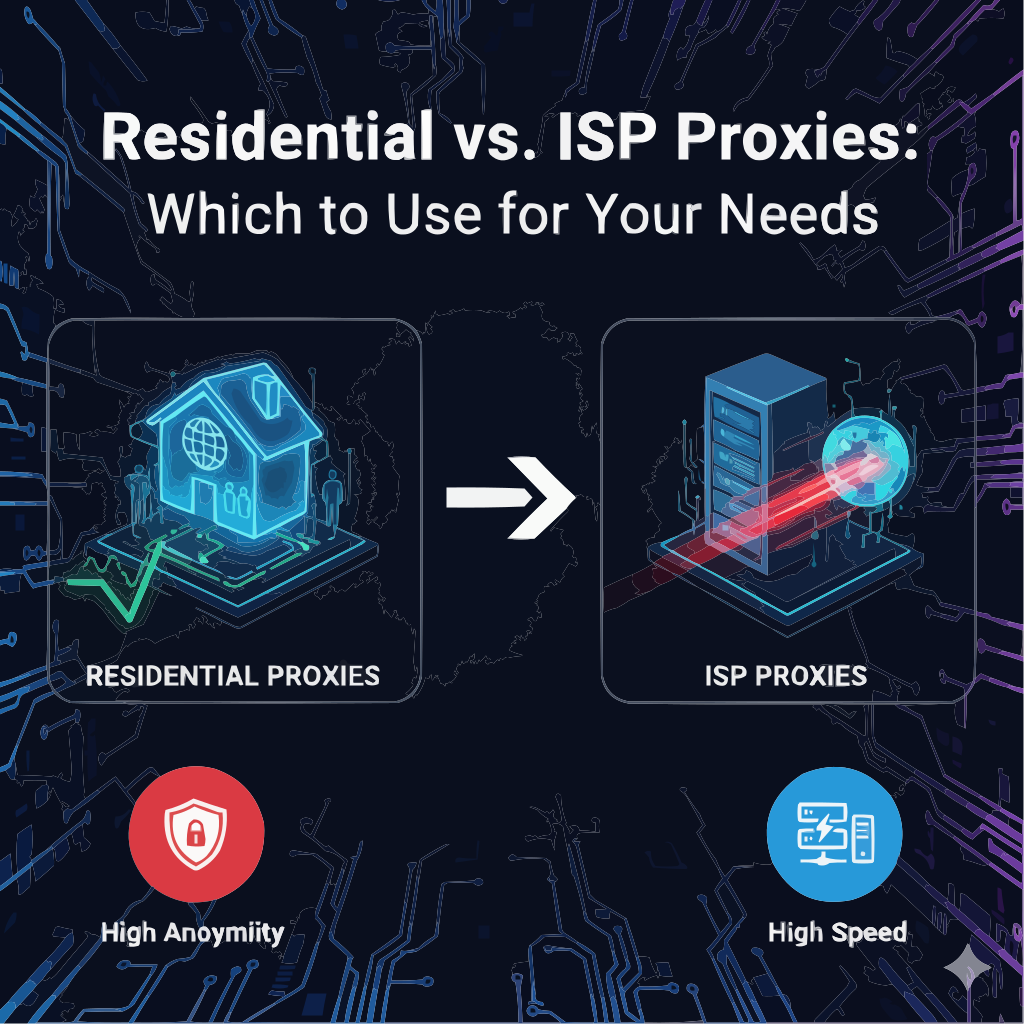
Understanding Proxy Types
Choosing the right proxy type is crucial for web scraping, privacy, and access. Let's compare residential and ISP proxies.
Residential Proxies
What They Are: IP addresses assigned by ISPs to homeowners.
Pros:
- Highest anonymity level
- Appear as real users
- Access geo-restricted content
- Bypass most anti-bot measures
Cons:
- Slower speeds
- More expensive
- Less reliable uptime
ISP Proxies
What They Are: Data center IPs registered through ISPs.
Pros:
- Fast speeds
- High reliability
- Cost-effective
- Great for high-volume tasks
Cons:
- Easier to detect
- May be blocked by some sites
- Less geographic diversity
Use Case Comparison
| Use Case | Best Choice |
|---|---|
| Web scraping | Residential |
| SEO monitoring | ISP |
| Ad verification | Residential |
| Price monitoring | ISP |
| Sneaker bots | Residential |
| Social media | Residential |
Key Takeaways
1. Residential proxies offer better anonymity
2. ISP proxies provide better speed and value
3. Choose based on your specific use case