Escape the AI Platform Trap: Building Model-Agnostic Automation in 2026
After the Claude Code Routines controversy, developers are fleeing vendor lock-in. Here's how to build portable AI workflows that survive platform changes.
Md. Rony Ahmed
· 1 min read
The Wake-Up Call
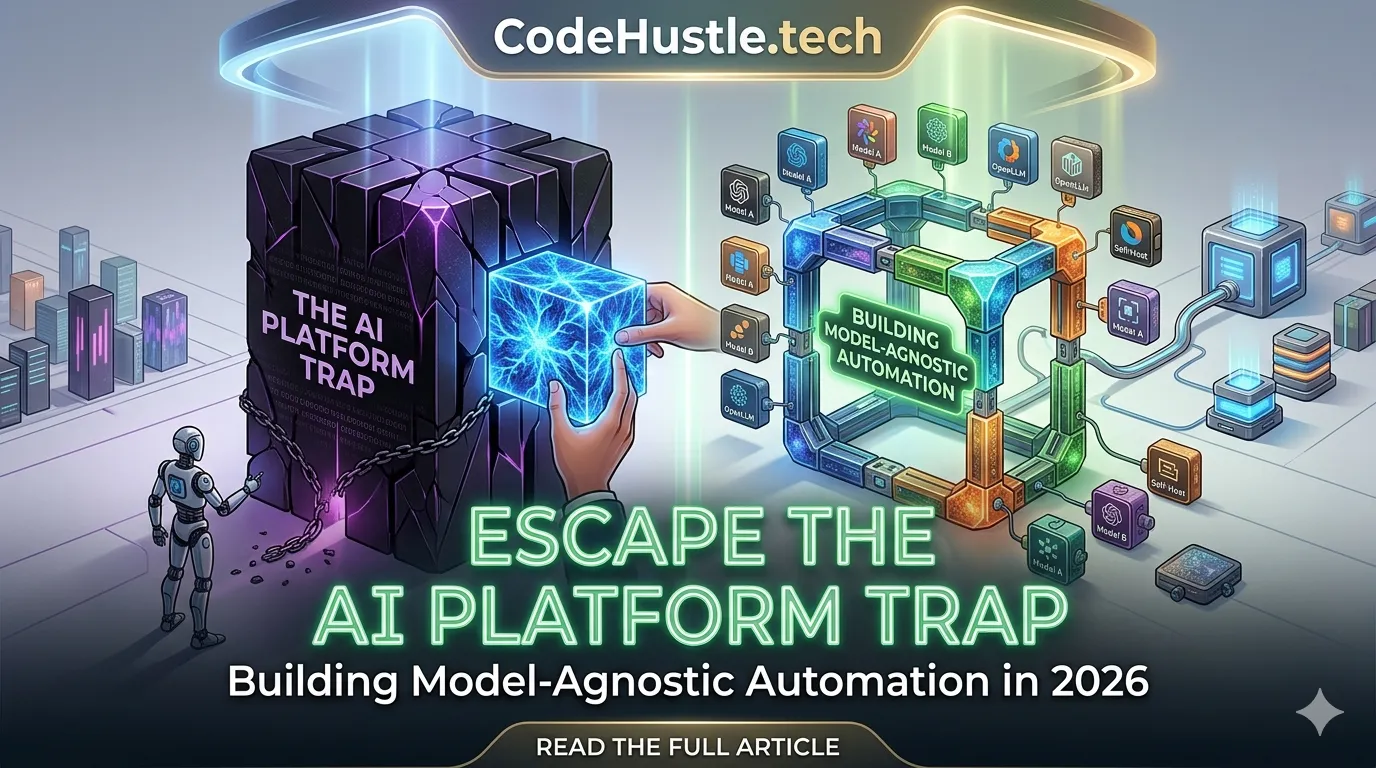
March 2026: Anthropic made Claude Code Routines Claude-exclusive. Thousands of developers woke up to harsh reality: their business logic was now hostage to one provider.
Hacker News hit 689 points.
The Lock-In Problem
| Platform | Risk |
|---|---|
| Claude Code Routines | HIGH |
| OpenAI Assistants API | MEDIUM |
| Custom implementations | NONE |
Pattern: More convenient = harder to leave.
The Model-Agnostic Architecture
Core Principle: Don't call AI providers directly. Call YOUR interface.
Architecture: Your App → [Your AI Abstraction] → [Claude | OpenAI | Ollama]
Implementation: Adapter pattern with smart failover router
Cost Comparison
| Provider | Monthly (5000 requests) |
|---|---|
| GPT-4o | ~$150 |
| Claude Sonnet 4 | ~$225 |
| Claude Haiku 4 | ~$25 |
| Ollama (local) | $0 |
Savings: $100-150/month with smart routing
Key Takeaways
1. Claude Code Routines was a wake-up call
2. Build abstraction layer before dependent on one provider
3. Implement failover routing
4. Include local fallback (Ollama)
5. Test failover before production